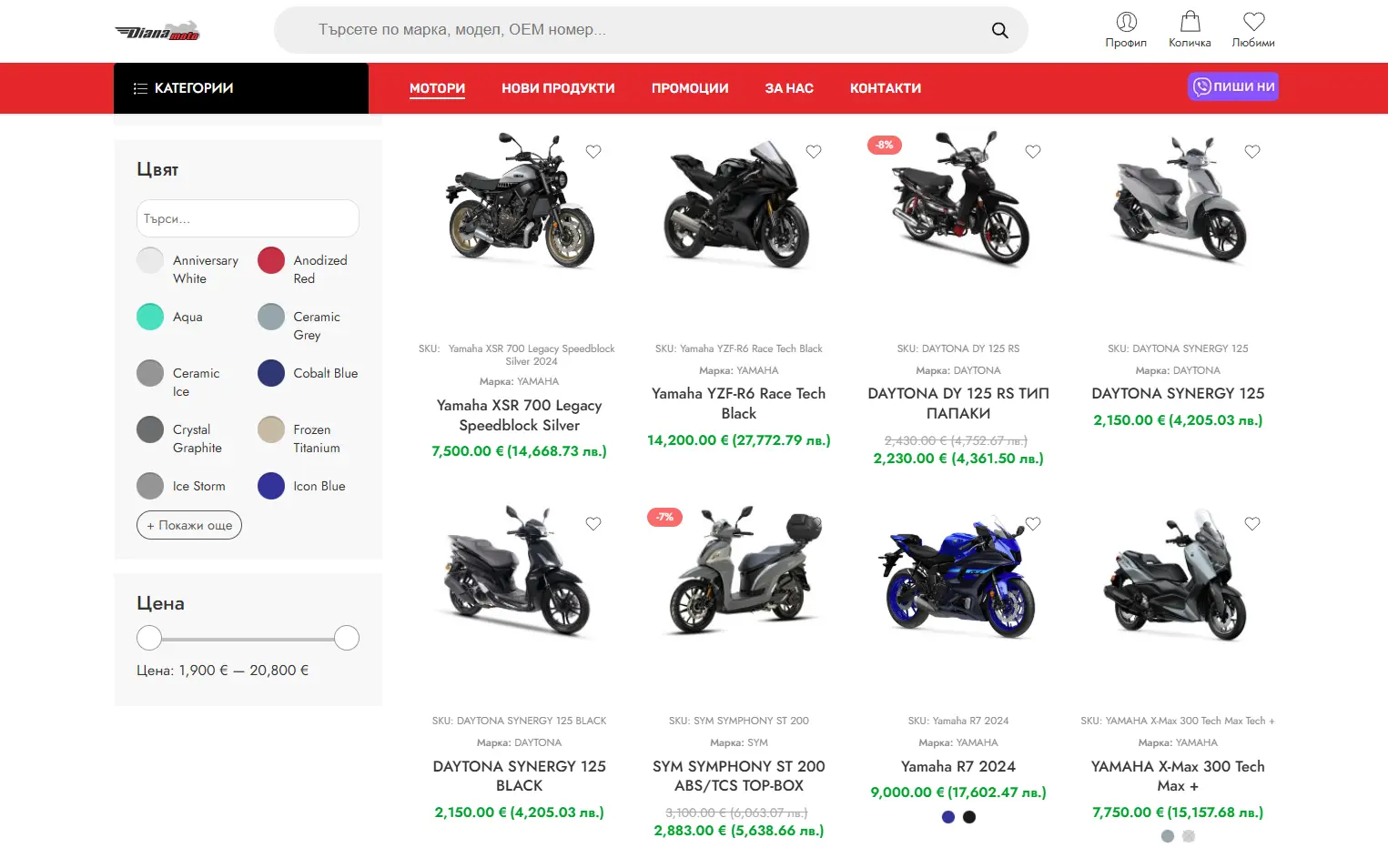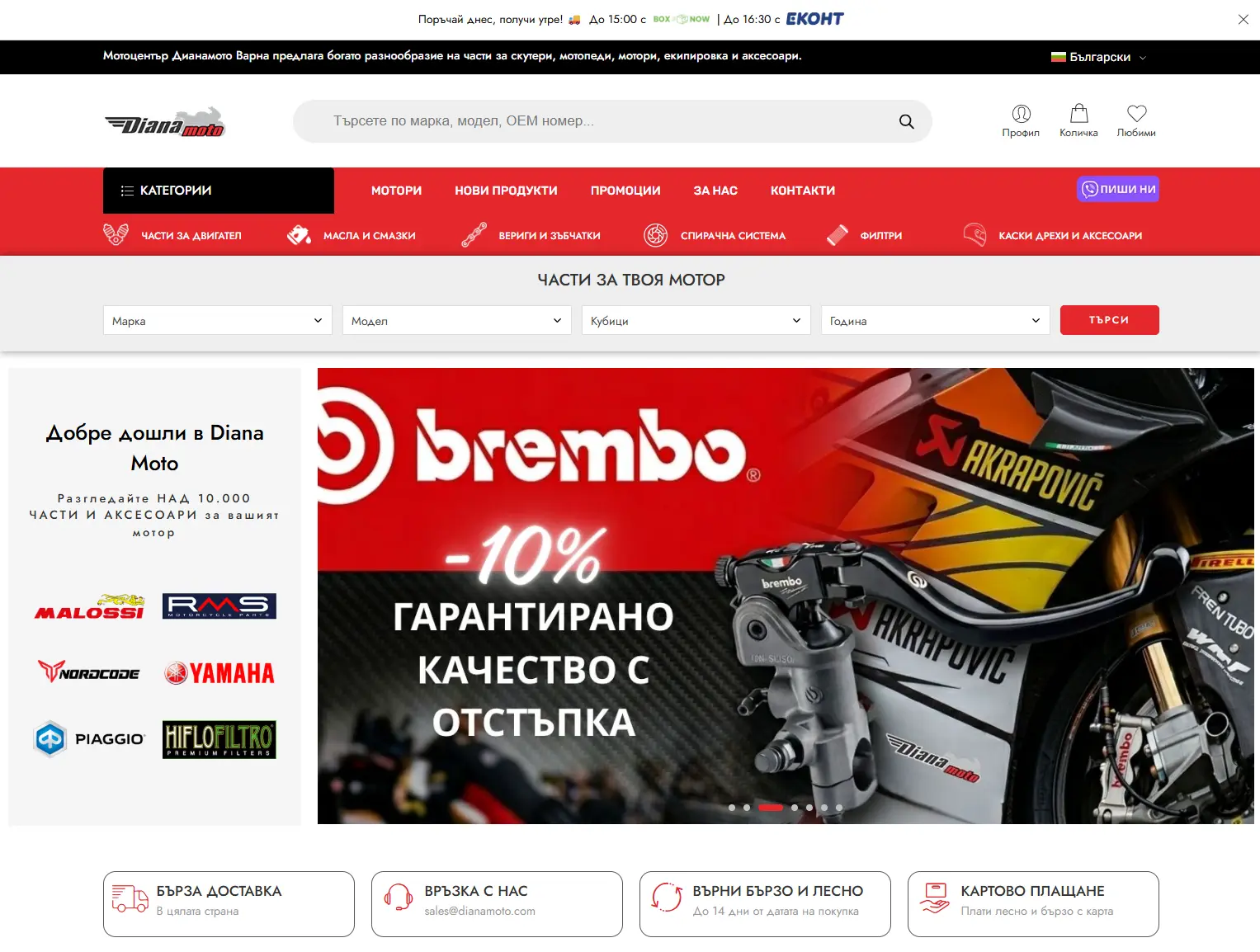
The client
Diana Moto is a motorcycle centre in Varna and one of Bulgaria's largest online retailers of motorcycle parts, equipment, and accessories - a catalogue of roughly 25,000 products, from engine parts and brake systems to helmets, gear, and the motorcycles themselves. Customers find the exact part by brand, model, displacement, and year, and expect what's in stock online to match what's on the shelf.
The problem with the old store
The store ran on OpenCart, with zero integrations. Stock, prices, payments, shipping, financing - none of it was connected to anything. At a few hundred products that's an inconvenience. At 25,000 it's a ceiling: the platform couldn't grow with the business, and every system the business actually ran on lived somewhere else.
The obvious fix - replatform to WooCommerce - is also the classic way an established store destroys itself. Migrations of this size routinely lose URLs, tank rankings that took years to earn, and go dark for days while the catalogue moves. With this much traffic and this many products, the migration wasn't allowed to cost anything: not a minute of downtime, not a single broken link, not a position in search.
How we moved it
We built the new WooCommerce store in parallel while the old one kept trading. The full catalogue - products, images, categories, attributes, customers - was migrated and verified in staged passes, so by switchover day the new store was a complete, tested copy rather than a work in progress.
URLs got the same discipline. We crawled the entire old site, mapped every address to its counterpart on the new one, and put redirects in place for anything whose structure changed. The switchover itself happened live: the store was taking orders on OpenCart in the morning and on WooCommerce after - with customers never seeing a maintenance page in between.
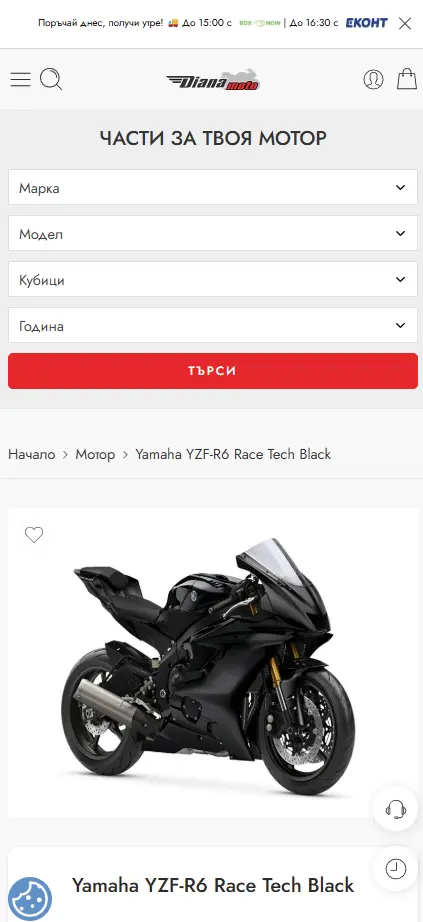
The store also serves two audiences properly: Bulgarian and English, as a true bilingual storefront rather than an afterthought translation - the same discipline we apply to our own site.
SEO retained, then grown
Years of rankings were the asset the migration had to protect. Because every URL either kept its address or redirected precisely to its successor, search engines followed the move without dropping the store's positions - the traffic curve simply didn't notice the replatform.
Then the new platform started paying. A cleaner architecture, faster pages, and a foundation we could actually optimize turned retention into growth: organic traffic is up roughly 70% since the migration.
From zero integrations to a connected store.
The old platform ran alone. The new one talks to every system the business depends on - which is where most of the day-to-day time savings actually come from.
Custom ERP
The store is connected to the company's own ERP, so a catalogue of 25,000 products stays accurate without anyone maintaining it twice. What the business system knows, the storefront shows.
Card payments
Integrated card payments at checkout - customers pay on the spot instead of arranging payment after the order.
Shipping couriers
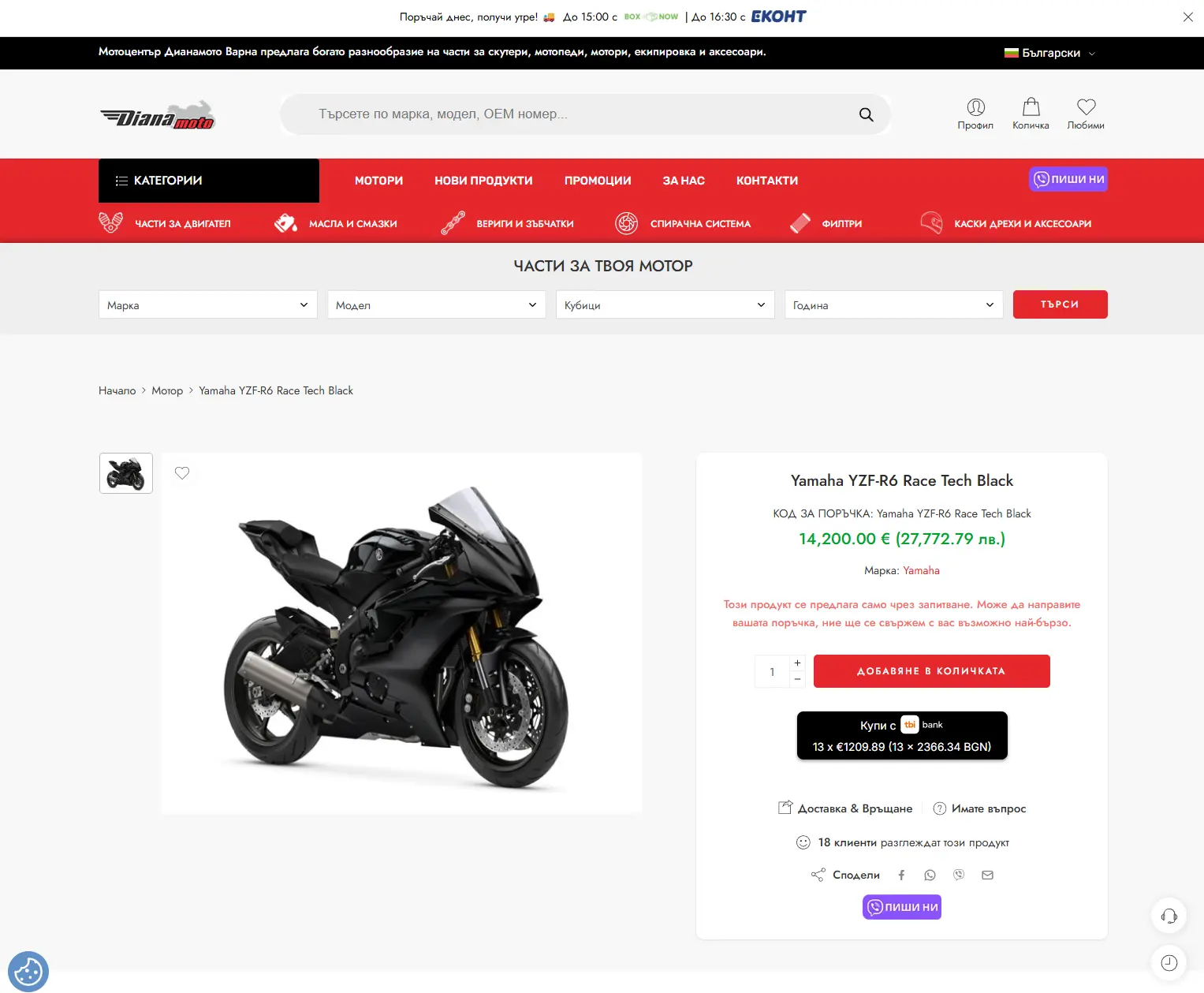
Checkout is wired into Bulgaria's courier networks - Econt and BoxNow - with same-day dispatch cutoffs shown right in the storefront: order by early afternoon, receive it tomorrow.
TBI Bank leasing
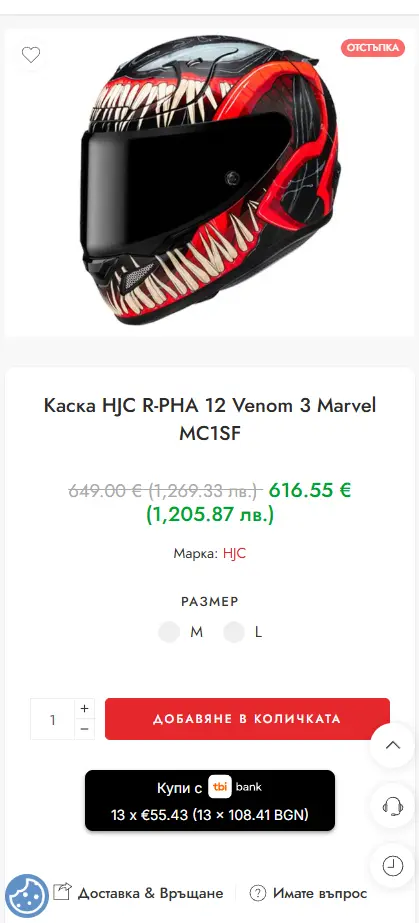
Purchase financing at product level. Customers see their monthly installment directly on the product page - which matters when the product is a €14,000 motorcycle - and apply without leaving the store.